Pages

Showing posts with label grammar. Show all posts

Wednesday, May 7, 2025

Countable and Uncountable Nouns

 COUNTABLE NOUNS 

Things you can count = 1-2-3-4-5... 
They can be singular 
(a dog, an apple, one cookie):

  • She has a dog. 
  • He is eating an apple. 
  • You can have one cookie. 
or plural:  She has three cats. 


Use  HOW MANY  for questions with countable nouns. 

  • How many T-shirts does Mary have?
  • How many students are there in your class?
   

 UNCOUNTABLE NOUNS 

Things you can't count, like liquids.
You can't count water, but you can count a bottle or a glass of water. 

UNCOUNTABLE  COUNTABLE

       pasta / rice                                        a bowl of pasta/rice
       pizza                                                         a slice of pizza
      clothes                                                      a shirt / a dress 
      jeans                                                         a pair of jeans
      cheese                                                   a piece of cheese
      bread                                                        a loaf of bread
     tea/coffee.                                             a cup of tea/coffee
       
Other examples of uncountable nouns:
information, money, time, love, intelligence, food, hair, homework, furniture, weather, glue, sand, shampoo

Use some for uncountable nouns:

  • Mom is buying some bread at the baker's. 
  • I would like some soup for lunch. 

Use  HOW MUCH  for questions with uncountable nouns:

  • How much homework do you have?
  • How much milk is in the fridge?
NOTE:
How much money do you have? 
How many euros do you have?

 SOME and ANY 

Use SOME before plural (countable) nouns and uncountable nouns in positive sentences: 

  • She has some cookies.
  • They have some eggs. 
  • I need to buy some clothes.
  • There is some ice cream in the freezer. 

Use ANY before plural nouns and uncountable nouns in negative sentences and questions*:

  • We don't have any oranges.
  • He doesn't have any pets. 
  • I have some paper, but I don't have any glue.
  • We don't have any tea.
  • Are there any apples?
  • Do you have any brothers or sisters?
  • Do we have any fruit?
  • Is there any milk in the fridge?

NOTE - SOME in questions (offers):

  • *Do you want / Would you like some cake? (you think the answer is yes)  
  • *Could I please have some water? (I think they will give me some water)

Use IS or ISN'T with singular nouns and uncountable nouns:

  • There is a garden, but there isn't a swimming pool.  Is there a garage? 
  • There's some water, but there isn't any juice. Is there any Coke?
Use ARE or AREN'T with plural nouns:
  • There are some sandwiches, but there aren't any cakes.  Are there any chips?

Friday, March 21, 2025

POSSESSIVE or PLURAL?

 When a noun   has something that belongs to it, we usually make it possessive by  adding an    APOSTROPHE and an S.  ('s)

the dog's bone
the teacher's book
the student's  pencil case
my grandmother's recipe    /   Grandma's recipe
the neighbor's yards

For plural nouns, add the apostrophe after the s:
the dogs' bones
the teachers' books
the students' pencil cases
our  grandmothers' recipes
the neighbors'  yard

When a plural noun ends in  /es/ :
class (singular)  - class's
classes (plural) -   classes'

Singular and Irregular plurals:
the  lady's shoes         --        the ladies' shoes
a child's toys                 __       the children's toys
a woman's clothing       __        women's clothing

When a singular noun ends in  /s/ we usually add an 's:

Mr. Jones's car
this class's   students
the bus's driver

 BUT we can also   write it like plural nouns:
Mr.    Jones's car  / Mr.  Jones' car
The plural of Jones is Joneses. , so the possessive is Joneses'
class's students  / class' students
the plural of class is classes, so the possessive is classes'

POSSESSIVE  or PLURAL?
1)   These computer__ are old.
2)   
Are you Richard__ uncle?
3)   Alfred has two sister__and  two brother__.
4)   My dog_ name is Lolita.  What's your dog__ name?
5)   This is Tom__ bike. 
6)   Do you work at the butcher__?
7)   When she goes to Mexico, she stays at her grandparent__ farm.
8) Piero__cousin__ live in  Leghorn. 
9)   Sarah visits her   relative__ often because her  cousin__  yard is enormous!
10)   Is that your phone? No, it's Heather__.
11) Whose bags are these? They're those men__ over there.
12)   I buy donuts at the baker__ every morning before school.
13)  Betty__ feet are the smallest in the class.
14)   Our class__ windows are open.
15) The school__ cafeteria is  not very big. 


Sunday, March 2, 2025

Means of Transportation (Transport)

How do you go to school?   /  How do you get to school?

How does your dad go to work?
Do your parents drive to work?
How is your mom going to work today? 
How many wheels does a truck have?

You walk to school or go  ON foot. 

You go BY  
bike / bicyle
boat / ferry / yacht / ship
bus
car
helicopter 
motorcycle / motorbike 
plane
taxi
train
truck / lorry
underground / subway / metro / tube


scooter       --             scooter         --          moped


Train   ---           Underground / subway / metro / tube


Thursday, February 27, 2025

WHAT ARE YOU DOING?

What are you doing? 
I           am     sleeping.    /   I'm sleeping.
You     are     sleeping.    /   You're sleeping.
He       is       sleeping.    /   He's sleeping.
She     is       sleeping.    /   She's sleeping. 
It          is       sleeping.   /    It's sleeping.
We      are    sleeping.    /   We're sleeping.
They   are     sleeping.   /   They're sleeping.
You     are    sleeping.    /   You're sleeping.


Are you sleeping?                  
       Yes, I am.   /     No, I'm not.

Is she sleeping?

       Yes, she is.
       No, she isn't.   /   
 No, she's not.

Are they sleeping?

       Yes, they are.
       No, they aren't.    /    No, they're not.

I am not sleeping, I'm reading.  
    I'm not sleeping, I'm reading.
You are not sleeping, you're reading.
    You're not sleeping, you're reading. 
He is not sleeping, he's reading.
She is not sleeping, she's reading..
We are not sleeping, we're reading.
They are not sleeping, they're reading.


I usually go to school at 8:00.
I'm going to school now.

I often read a book on weekends.
I'm reading a book.

He sings in a band.
He's singing in a band 


We always play football on Saturdays.
We are playing football.

They never eat fish. 
They are eating fish.


Emphasis on certain words. What do you understand?
I am not watching TV, I'm studying!
What 
are you doing?
What are you doing?
What are you doing?
What are you doing? 

ACTIVITIES - Be creative!
1) Write questions that you think your classmates will answer "Yes, I do." or "Yes, I am."  You get a point for all YES answers.
For example:
Do you like cheese?  Yes, I do. / No, I don't.
Are you sitting down? Yes, I am. / No, I'm not.

2) Write questions about your class.  A student closes his or her eyes and tries to answer the questions.
For example:
Who is sitting next to John?
What is Mary wearing?
What color are David's eyes?

3) What's happening? Look around the room or out the window and write sentences about what you see.

4) With a partner, write sentences about things you have in common. 
For example:
We are both wearing jeans. 
We both have brown hair. 

5) Draw a picture of bad things people do. What do good people do? 
For example:
Draw a person throwing garbage out a car window. What is the person doing? Good people throw trash in a bin. 


Monday, February 24, 2025

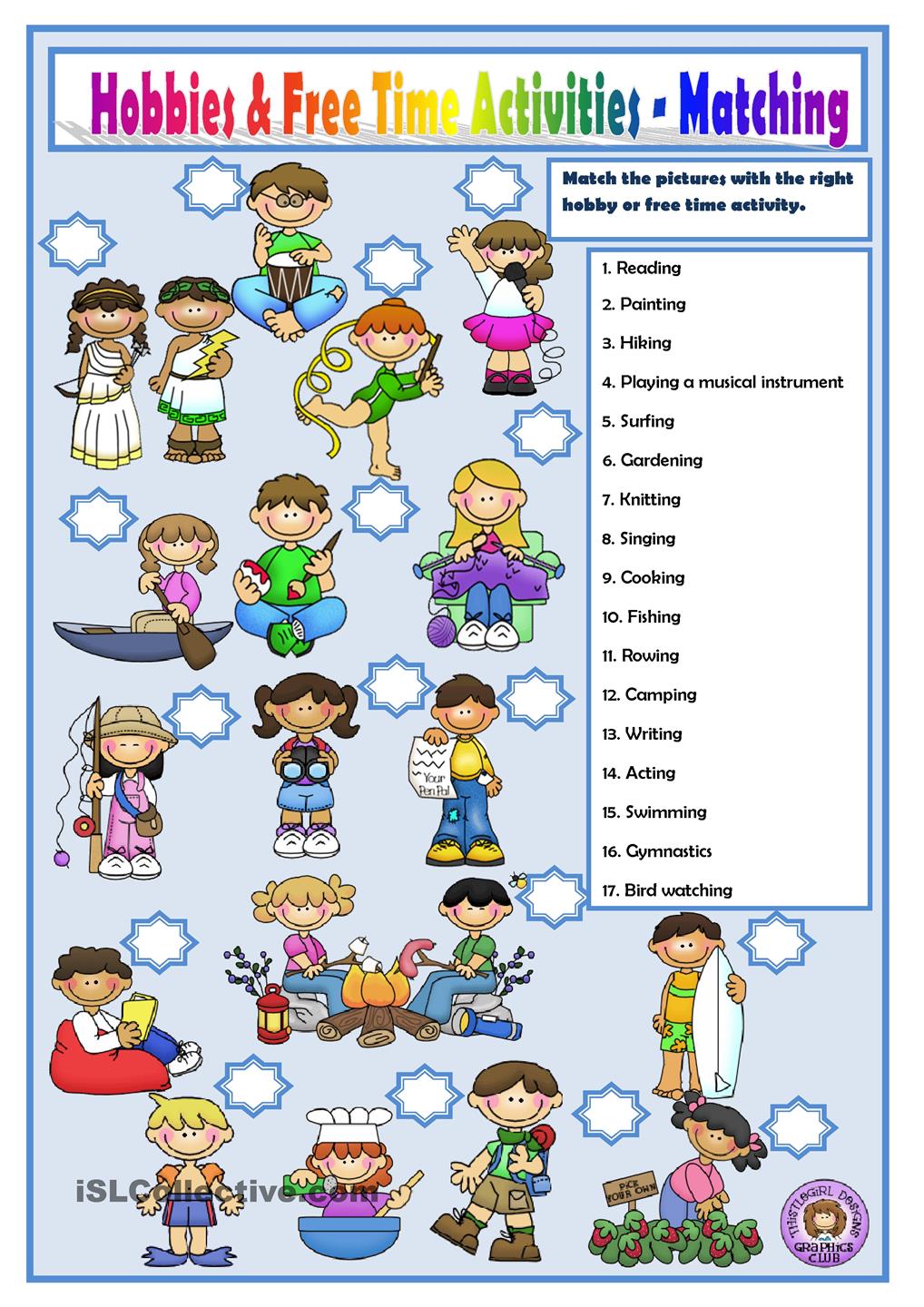
What are they doing?

Do you like doing these activities?

How often do you do them?

Which activities don't you like?

Which activities can you do?

Which can't you do?


Sunday, February 23, 2025

GESE 3 - ACTIVITIES


REMEMBER: 
you PLAY - an instrument (the piano, the guitar) / a game (Monopoly, a computer game) / sports that use balls (football, rugby, tennis).
                   He plays the piano very well.
                   We like to play Monopoly during the Christmas holidays.
                   They play football three times a week.


go + ing = She goes swimming twice a week. 

do + activities = We do exercises at home. He does karate.

play chess / ride a bike / chat online / play video games 

Saturday, January 25, 2025

What nationality are you?

What nationality are you? 
I'm Italian.
What's your nationality?
    I'm Italian.
Where are you from? 
    I'm from Italy. 
    I'm from Florence, Italy. 


Thursday, February 14, 2019

GRADE 3: things to know

GESE 3
DAILY ROUTINES - everyday life


TIME

4:00 = It's four o'clock.
4:05 = It's four oh five.
4:15 = It's a quarter past four.                 It's four fifteen.
4:30 = It's half past four.
                It's four thirty.
4:35 = It's twenty-five to five.                 It's four thirty-five.
4:45 = It's a quarter to five.                 It's four forty-five.
4:55 = It's five to five.                 It's four fifty-five.

9 - 5 = from nine to five

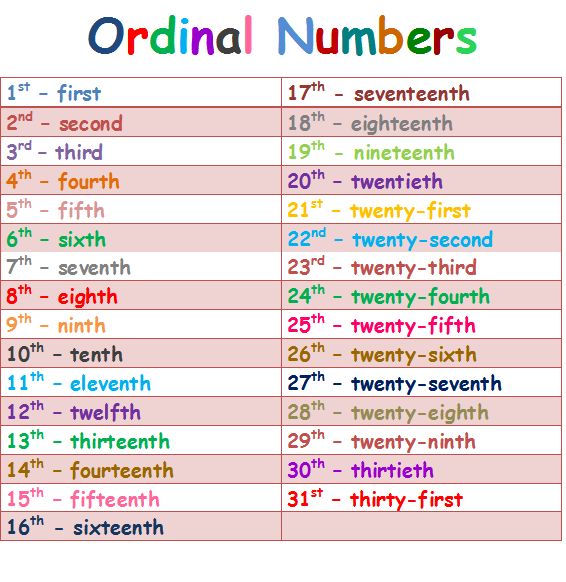
DATES - Ordinal Numbers
April 25 or 25 April = on the twenty-fifth of April OR April twenty-fifth.

1999 = nineteen, ninety-nine 2002 = two thousand, two
November - January = from November to January


CAN and CANNOT /can’t
I can jump, but I can’t fly.


Describing pictures
 What are they doing?
Is the woman writing a letter?   
No, she isn’t writing a letter. She’s reading a book.

Past of TO BE – Where were you yesterday?
          What was the weather like yesterday?
I wasn’t at school yesterday. It was Sunday, so I was at home.
My brother wasn’t born in Piombino, he was born in Livorno.
We weren’t at home because we were at the cinema.
Were you tired/hungry/angry/thirsty when you went to bed last night?

GIVING DIRECTIONS
LOCAL PLACES
First turn right and go straight for three blocks, then turn left. The shop is on the corner, opposite the cinema.


Click HERE for more information on GESE 3

Use the exercises in the column on the left for more practice in each topic area.
Click on Grade 3 or Trinity under LABELS.


Sunday, March 25, 2018

PRONOUNS


SUBJECT pronoun-verb-OBJECT pronoun

I see you.                          
You see me.                           
She sees him.                        
He sees her.
She sees it.
It sees us.
We see them.
They see us.

Object pronouns are also used after a preposition: 
Please give it to me. 
Don't give them to us.

POSSESSIVE ADJECTIVE pronouns are used before a noun and can be before or after the verb: 
That is my book.
Your book is on the table. 

POSSESSIVE pronouns replace a noun: 
Whose backpack is this? It's
 mine. 
Is that your sandwich? No, it's hers.
Those aren't my keys, they're yours..